
| Brand Name: | Sea Freight |
|---|---|
| Payment Terms: | L/C, D/A, T/T, D/P |
| Warehousing Serives: | Yes | Additionalservices: | Door-to-door Delivery, Warehousing, And Freight Forwarding |
|---|---|---|---|
| Customs Clearance: | Included In Service | Productname: | LCL International Shipping |
| Frequency: | 4 Shifts Per Week | Shipping Type: | Less Than Container Load (LCL) |
| Shipping Mode: | Sea Freight |
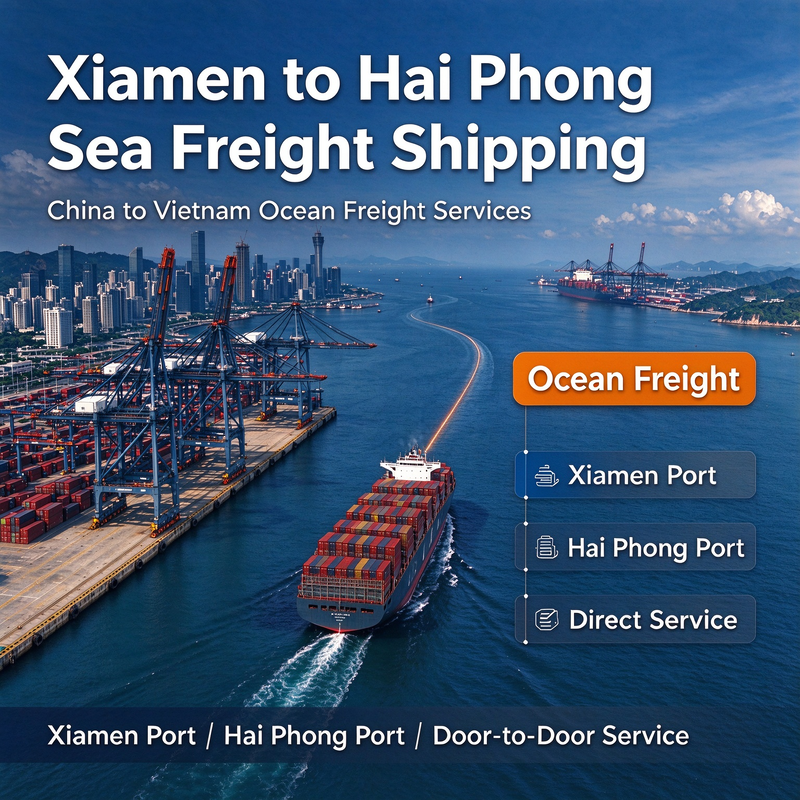
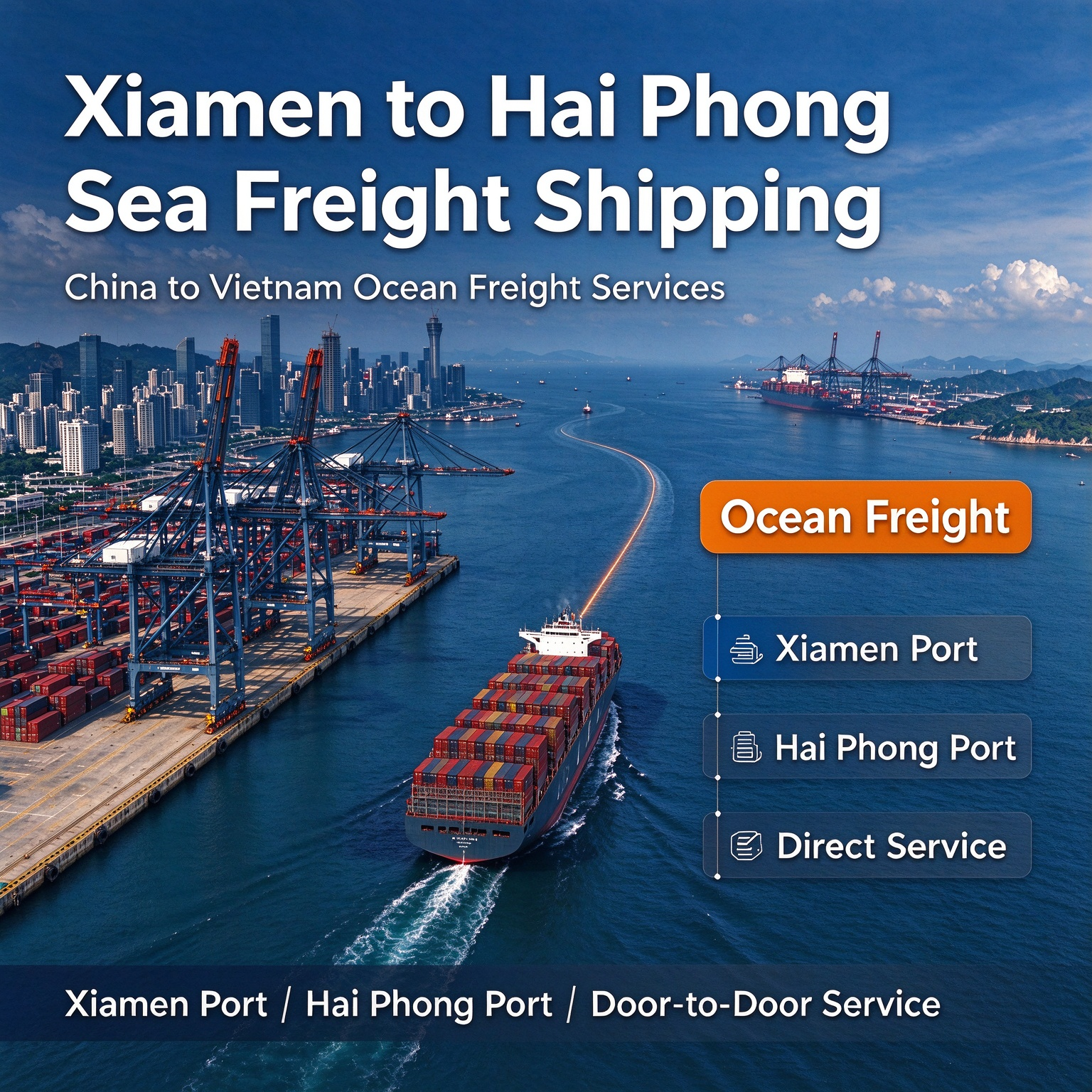
Sea freight from Xiamen to Hai Phong provides an international ocean transportation solution for businesses importing commercial goods from China to Vietnam. This shipping route connects Xiamen, an important coastal shipping and export center in southeastern China, with Hai Phong, one of Vietnam's major maritime and industrial centers.
For importers, wholesalers, distributors, manufacturers, and international trading companies, ocean freight offers a practical way to transport commercial cargo between the two countries. Businesses can arrange shipping for industrial materials, machinery components, furniture, textiles, electronics accessories, household products, and general merchandise.
Xiamen has an established international port network supporting containerized cargo transportation and regional trade. Hai Phong serves as an important gateway for northern Vietnam, connecting imported goods with industrial zones, manufacturing facilities, warehouses, and distribution markets.
Depending on cargo volume, product characteristics, budget, and delivery requirements, businesses can choose suitable container shipping arrangements, including Less Than Container Load (LCL) and Full Container Load (FCL).
Sea freight services can also be coordinated with supplier pickup, export customs clearance, destination import procedures, and inland transportation to provide a more integrated China-to-Vietnam shipping solution.
Ocean freight is widely used for commercial cargo transportation between China and Vietnam. It is particularly suitable for businesses importing larger quantities of goods, industrial supplies, wholesale products, and regular purchasing orders.
For shipments from Xiamen to Hai Phong, the transportation arrangement depends on cargo specifications, shipping schedules, available carrier services, and destination requirements.
LCL Sea Freight
Less Than Container Load shipping is suitable for businesses whose cargo does not occupy an entire shipping container.
Under an LCL arrangement, shipments from different exporters are consolidated into one container. Importers share container space and pay according to the applicable chargeable cargo volume or weight.
LCL shipping is useful for small wholesale orders, commercial samples, household products, accessories, and shipments collected from multiple Chinese suppliers.
For businesses purchasing products from different factories, cargo consolidation can help combine eligible shipments before international transportation.
FCL Sea Freight
Full Container Load shipping is designed for businesses transporting larger quantities of cargo that require dedicated container space.
Common container options include 20GP, 40GP, and 40HQ, depending on equipment availability and shipment requirements.
FCL transportation is suitable for machinery, furniture, building materials, industrial equipment, manufacturing supplies, and large-volume commercial merchandise.
The appropriate container should be selected according to cargo dimensions, gross weight, loading requirements, and container capacity.
International sea freight involves several connected logistics stages. Proper coordination helps businesses organize cargo transportation and prepare the required shipping documentation.
Step 1: Cargo Information and Quotation
The shipping process begins with collecting the necessary cargo information, including product descriptions, package quantities, gross weight, dimensions, pickup address, and destination address.
These details help determine the suitable shipping arrangement and estimate the transportation expenses.
Step 2: Supplier Pickup and Cargo Preparation
Goods can be collected from the supplier's factory, warehouse, or designated location in Xiamen.
For shipments involving multiple suppliers, cargo collection and consolidation may be arranged according to the agreed service scope.
Before transportation, products should be properly packaged, labeled, and prepared for warehouse handling and container loading.
Step 3: Export Customs Clearance in China
Before departure, export cargo must complete the applicable customs declaration procedures.
Common documents include commercial invoices, packing lists, product descriptions, and other supporting export documentation.
Accurate cargo declarations help reduce documentation discrepancies and support the export process.
Step 4: Container Loading and Ocean Transportation
After export customs clearance, cargo is prepared for international sea transportation.
Depending on the shipping arrangement, goods are loaded into a shared container or a dedicated container.
The shipment then moves through the selected ocean freight service toward Hai Phong, Vietnam.
Step 5: Import Customs Clearance in Vietnam
Upon arrival, the cargo must complete the applicable Vietnamese import customs procedures.
Import documentation, product classification, declared customs value, and relevant regulatory requirements are reviewed before cargo release.
Additional permits, certificates, or inspections may be necessary for certain product categories.
Step 6: Destination Handling and Final Delivery
After customs clearance and cargo release, goods can be transported to the consignee's designated address.
Delivery arrangements may include commercial warehouses, factories, distribution centers, retail premises, and other eligible business locations in Hai Phong and surrounding areas.
Door-to-door transportation can be arranged when required, subject to the agreed service scope.
Hai Phong is an important maritime and industrial center in northern Vietnam. Its port infrastructure supports international cargo transportation and regional trade, making it an important destination for businesses importing goods from China.
Hai Phong's port system serves manufacturers, industrial parks, trading companies, and distributors throughout northern Vietnam.
After arriving at the destination port, cargo may be transported to different commercial and industrial locations according to the consignee's delivery requirements.
Common destination areas include:
Hai Phong City
Hanoi
Bac Ninh
Quang Ninh
Hung Yen
Hai Duong
The final delivery arrangement depends on the actual destination address, cargo characteristics, customs release status, and inland transportation requirements.
For importers shipping goods from Xiamen, selecting an appropriate destination port and local delivery arrangement is important for managing the overall supply chain.
Sea freight from Xiamen to Hai Phong supports a wide range of commercial cargo categories, subject to carrier acceptance and Vietnamese import regulations.
Machinery and Industrial Equipment
Manufacturing machinery, machine components, industrial accessories, and mechanical spare parts can be transported according to their dimensions, weight, and handling requirements.
Electronics and Electrical Products
Eligible electronic accessories, electrical components, cables, and consumer electronics can be arranged for international container transportation.
Furniture and Household Products
Furniture, lighting products, home decorations, kitchen accessories, storage products, and household merchandise are common categories for commercial ocean freight.
Textiles and Garments
Clothing, fabrics, curtains, bedding products, and other textile merchandise can be shipped for wholesalers, retailers, and distributors in Vietnam.
Building Materials and Hardware
Eligible construction materials, fittings, hardware products, and industrial supplies can be transported according to packaging and cargo requirements.
Plastic Products and General Merchandise
Plastic household products, packaging materials, daily necessities, promotional items, and general wholesale merchandise are also suitable for ocean freight arrangements.
Certain dangerous goods, chemicals, batteries, food products, and regulated cargo may require special documentation, approval, or handling arrangements before booking.
The cost of sea freight from Xiamen to Hai Phong depends on several factors, including cargo volume, weight, container type, product characteristics, and destination services.
For LCL shipments, charges are generally calculated according to chargeable cargo volume or weight under the applicable freight tariff.
For FCL shipments, the quotation generally depends on container size, ocean freight rates, and relevant origin and destination charges.
Other cost factors may include:
Cargo pickup and origin transportation
Warehouse receiving and handling
Cargo consolidation, when applicable
Export customs clearance
Container loading and terminal handling
Ocean freight charges
Shipping documentation fees
Destination terminal handling
Import customs clearance
Applicable import duties and taxes
Inland transportation and final delivery
To obtain an accurate shipping quotation, businesses should provide product descriptions, package quantities, cargo dimensions, gross weight, pickup location, and destination address.
An itemized quotation helps importers understand the difference between international ocean freight, local port charges, customs-related expenses, and final delivery costs.
Customs clearance is an important part of international shipping between China and Vietnam.
For exports from Xiamen, businesses need to prepare accurate product descriptions, commercial invoices, packing lists, and other documents required for export declaration.
When cargo arrives in Vietnam, importers must comply with the applicable customs procedures and product-specific regulations.
Common shipping documents include:
Commercial Invoice
Packing List
Bill of Lading
Certificate of Origin, when applicable
Import License, when required
Product Inspection or Compliance Documents, when applicable
Vietnamese import duties and taxes depend on the product's HS code, customs value, country of origin, and applicable trade regulations.
Some products may require additional certification, inspection, or import permits before customs release.
Importers should confirm the applicable requirements before shipping to reduce the possibility of documentation problems, customs delays, and unexpected expenses.
For door-to-door shipping arrangements, the responsibilities for customs declaration, import duties, taxes, and destination delivery should be clearly agreed upon before cargo departure.
Suitable for Different Cargo Volumes
LCL and FCL shipping options allow businesses to select transportation according to their shipment quantities and purchasing requirements.
Practical for Commercial Cargo
Ocean freight supports bulk merchandise, industrial supplies, machinery, furniture, and other eligible products.
Flexible Supplier Coordination
Eligible cargo from different suppliers can be collected and consolidated before international transportation.
Support for B2B Importers
Wholesalers, manufacturers, distributors, sourcing companies, and trading businesses can organize regular shipments according to their supply chain requirements.
Integrated Logistics Arrangements
Cargo pickup, export customs clearance, international sea freight, import procedures, and final delivery can be coordinated as part of an agreed shipping service.
Access to Northern Vietnam Markets
Hai Phong provides an important maritime gateway for businesses distributing goods to industrial and commercial markets in northern Vietnam.
Q1: What shipping methods are available from Xiamen to Hai Phong?
The main ocean freight options include LCL and FCL shipping. LCL is suitable for smaller cargo quantities, while FCL is designed for shipments requiring dedicated container space.
Q2: Which port is used for sea freight to Hai Phong?
Cargo is arranged through the applicable port facilities serving Hai Phong. The actual port terminal and shipping route depend on the selected carrier and booking arrangement.
Q3: Can I arrange door-to-door sea freight from Xiamen to Hai Phong?
Yes. Depending on the service agreement, transportation can include supplier pickup, export customs clearance, ocean freight, import customs clearance, and final delivery to the designated address.
Q4: What documents are needed for shipping from China to Vietnam?
Common documents include commercial invoices, packing lists, and bills of lading. Additional certificates or permits may be required depending on the product category.
Q5: How is the shipping cost calculated?
Shipping costs depend on cargo volume, gross weight, container requirements, origin charges, ocean freight rates, destination handling, customs procedures, and final delivery requirements.
Q6: Can goods from multiple Chinese suppliers be shipped together?
Yes. Eligible shipments from different suppliers can be collected and consolidated at an appropriate warehouse before international ocean transportation.
Q7: What information is required for a shipping quotation?
Provide the product description, package quantity, dimensions, gross weight, pickup address, preferred shipping arrangement, and final delivery address in Vietnam.
If your business needs to transport commercial goods from Xiamen, China, to Hai Phong, Vietnam, selecting an appropriate ocean freight arrangement is important for managing transportation costs and import requirements.
Whether you are shipping industrial components, household products, machinery, textiles, electronics accessories, or general merchandise, the shipping plan can be arranged according to your actual cargo volume and delivery requirements.
Prepare your cargo details, supplier location, package dimensions, gross weight, and destination information to obtain a quotation based on your shipping requirements.
Shipping Route: Xiamen, China → Hai Phong, Vietnam
Shipping Method: Sea Freight / Ocean Freight
Available Shipping Options: LCL Sea Freight and FCL Container Shipping
Related Logistics Services: Cargo Pickup, Cargo Consolidation, Export Customs Clearance, Ocean Freight, Import Customs Clearance, and Door-to-Door Delivery.